Event design
From first invite to final recap: What great event design looks like
Event organisers – we get it. You have the venue to arrange, speakers to book, catering to arrange, an agenda to build, tech to sort out, the list goes on. We’ve seen that sometimes, it can be a last-minute scramble to get together a logo, a banner, and graphics for promotion. And then you need a slide template…and nothing quite matches because they were done in a rush by different people.
But design should be the thread running through the whole event – from the first invite landing in someone’s inbox through to the recap graphic they share on LinkedIn when it’s over.
It’s that thread of consistency that builds trust and recognition.
To show what that looks like, here’s a fictional event, with real design challenges, from start to finish…
Meet Neon Lime.
Neon Lime is a medium sized tech consultancy. They are planning their first annual client conference – a one-day event for around 120 people; clients, peers and prospects.
It’s a big deal for them, and of course they want it to feel professional, distinctive and memorable. They have their own brand, but they want the event to have its own identity. They need everything from promotional graphics to on-the-day materials to post-event content.
Here’s how it goes…
The event brand
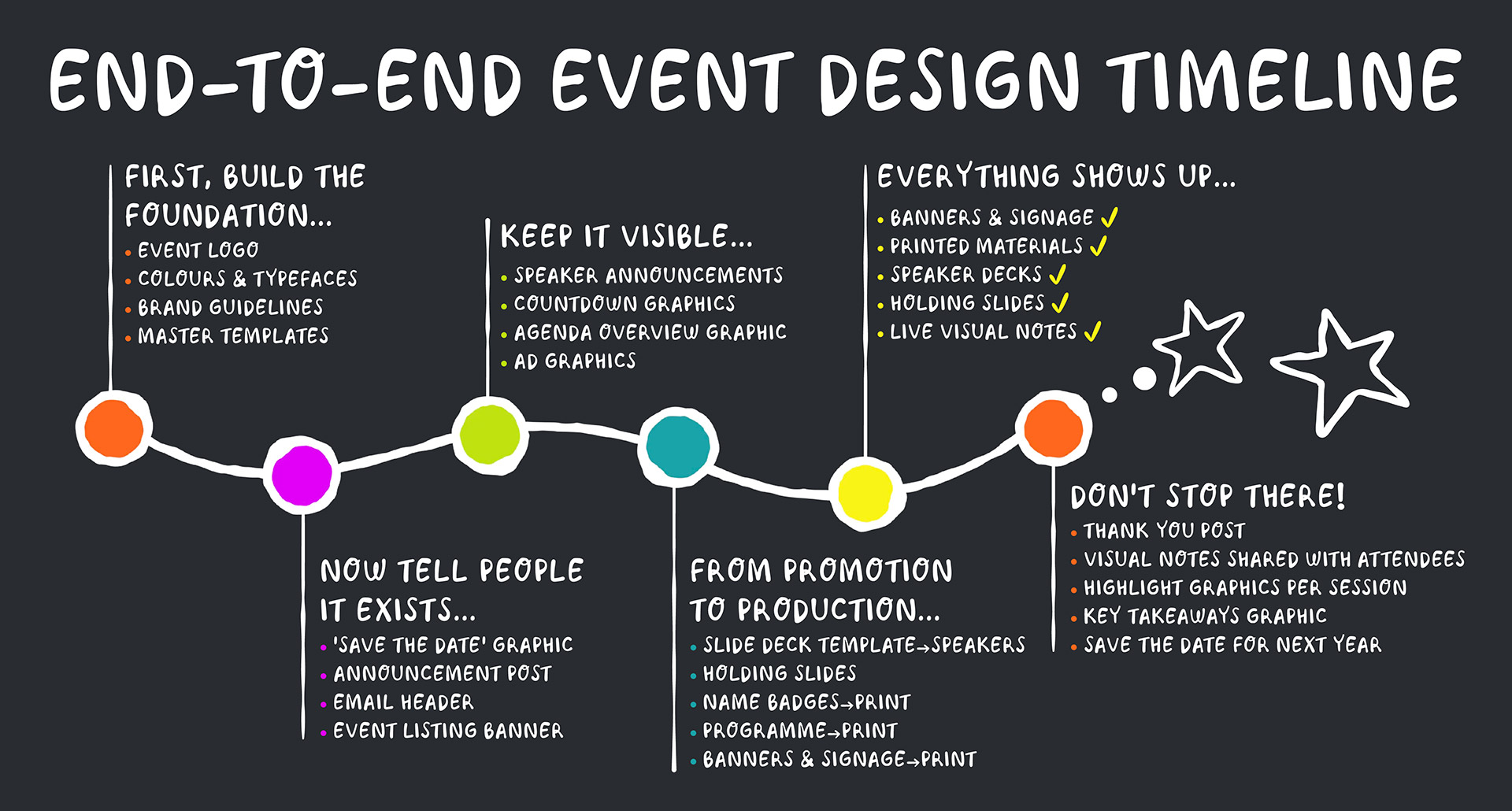
Before anything gets designed, you need to establish what the event actually looks like.
For Neon Lime, that means creating a visual identity for the conference – something distinct from their everyday company brand, but clearly part of the same family.
The output of this stage: an event logo, a colour palette, typefaces, and basic brand guidelines that everything else will be built from. It sounds like a lot, but it’s the foundation that makes every other piece faster to produce and more effective.
Without it, you’re making design decisions from scratch every single time. With it, everything just fits.
Getting the word out
Neon Lime needs to fill those 120 seats, which means promotion – and promotion means graphics.
Social media announcement posts. Speaker introduction cards. Email header artwork. A banner for the event listing page. Countdown graphics as the date approaches.
Each piece needs to look like it belongs to the same event. With the brand guidelines already in place, this is straightforward rather than chaotic. The marketing team isn’t reinventing the wheel for every post – they’re working from a consistent visual toolkit.
The difference in professional appearance between “designed consistently” and “designed in a hurry” is immediately obvious to anyone receiving it. It shows that this event is worth showing up to.
On the day
This is where the brand really earns its keep.
Neon Lime’s attendees walk in and see pull-up banners, directional signage, and a registration desk that all look like they belong together. They sit down to a printed programme that matches the slide template up on screen. The holding slides between sessions look intentional, not like someone’s hastily thrown up a logo on a blue background.
The speakers have been given a slide template to work from – so even though six different people are presenting, there’s visual coherence throughout the day. Not rigid uniformity, but a recognisable thread.
This stage covers: signage and print materials, slide deck templates, holding slides, name badges, printed programmes. Anything the attendees see and touch.
Visual notes
This is the one most people haven’t thought about – until they see it happening.
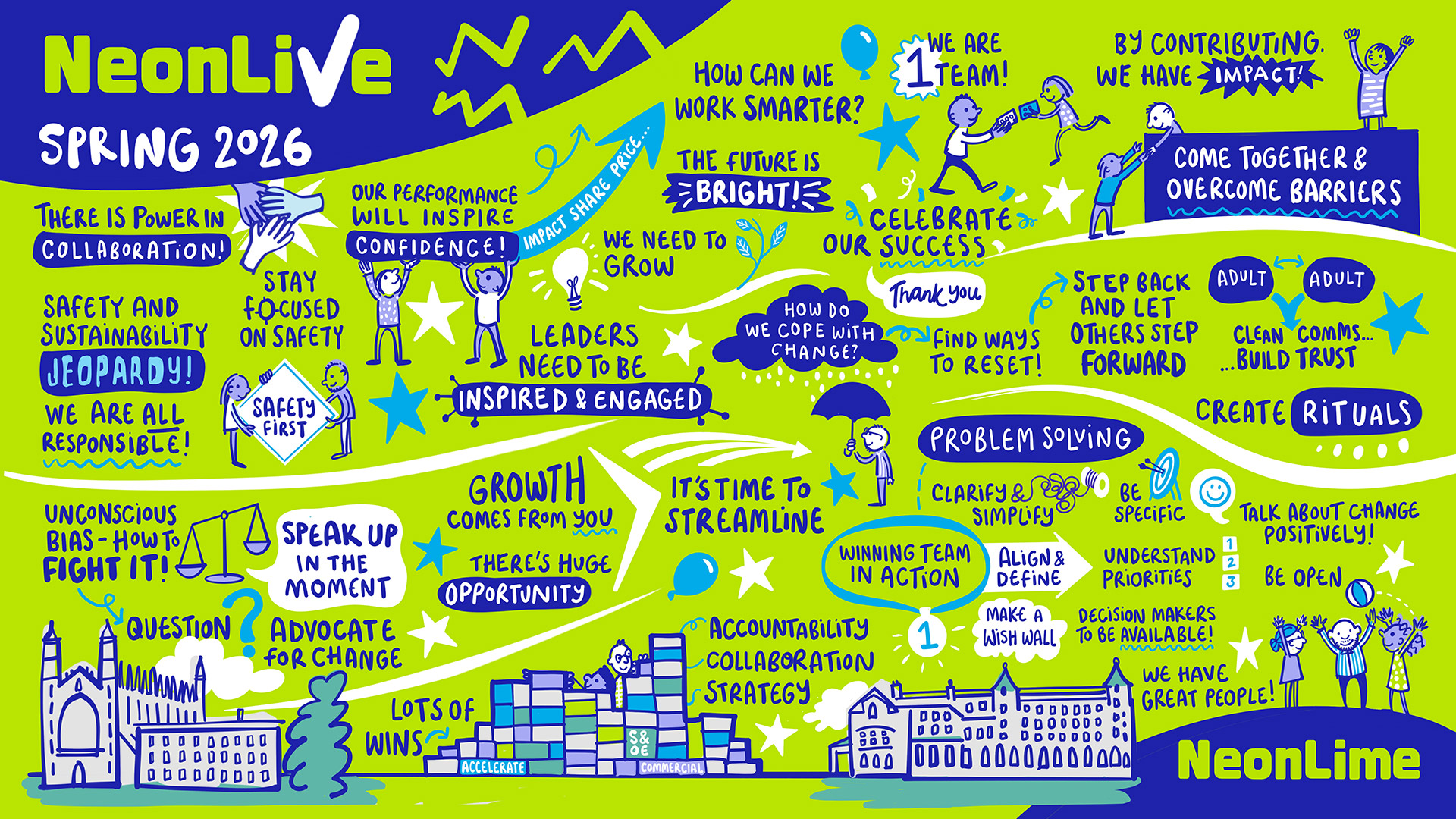
During the conference, a visual note-taker works live in the room, capturing the key ideas from each session as they unfold: talk titles, speaker quotes, frameworks, big themes – all drawn in real time.
It does something interesting to a room. People who are half-listening suddenly tune in when they see their speaker’s idea appear as a visual. It gives visual learners something to anchor to. It makes the content feel more alive.
For Neon Lime, it also solves the practical problem of what to send people after the event. Most conference follow-up emails are a PDF agenda and a “thanks for coming.” Visual notes give you something genuinely worth sharing, and endlessly repurposable – a record of the day that people actually want to look at.
After the event
The event’s done – but the conversation doesn’t have to be. Neon Lime has just had 120 people in a room. There’s momentum, goodwill, and a load of content from the day. So how to carry it forward?
A polished version of the visual notes gets shared with all attendees – a tangible reminder of what was covered. Social recap graphics go out on LinkedIn: a highlight from each session, key stats from the day, a “thank you for coming” post that looks as considered as the original promotional material.
It ties the whole thing together. The event doesn’t just happen and fade – it becomes a piece of content in its own right.
What this actually takes
Neon Lime is fictional, but this is a real way to approach event design.
What you need is someone who thinks about design across the whole event journey – not just the bit where you need a banner by Friday.
The businesses that get this right aren’t necessarily bigger or better resourced. They’ve just brought design into the planning earlier, rather than near the end.
If you’ve got an event coming up – a conference, a summit, a training day, a client gathering – it’s worth thinking about the full picture early. Even if you only end up doing a few of these things, knowing the options means you make better decisions about where to spend your effort.
Planning an event? Drop us a message and we can talk through what would be useful for you – info@carbonorange.com